The tours · History and food
From the port to the table: the history of Genoa in what it eats
The history of Genoa told through what it ate. We follow the city’s three medieval markets, San Giorgio, Banchi and Soziglia, from the harbour where goods arrived to the shops that still fry, knead and candy as they always have.
- Duration 2 hours
- Route From Piazza San Giorgio to Soziglia, about 1.2 km on foot
- Languages Italian, Spanish, English
- Group Up to 10 people
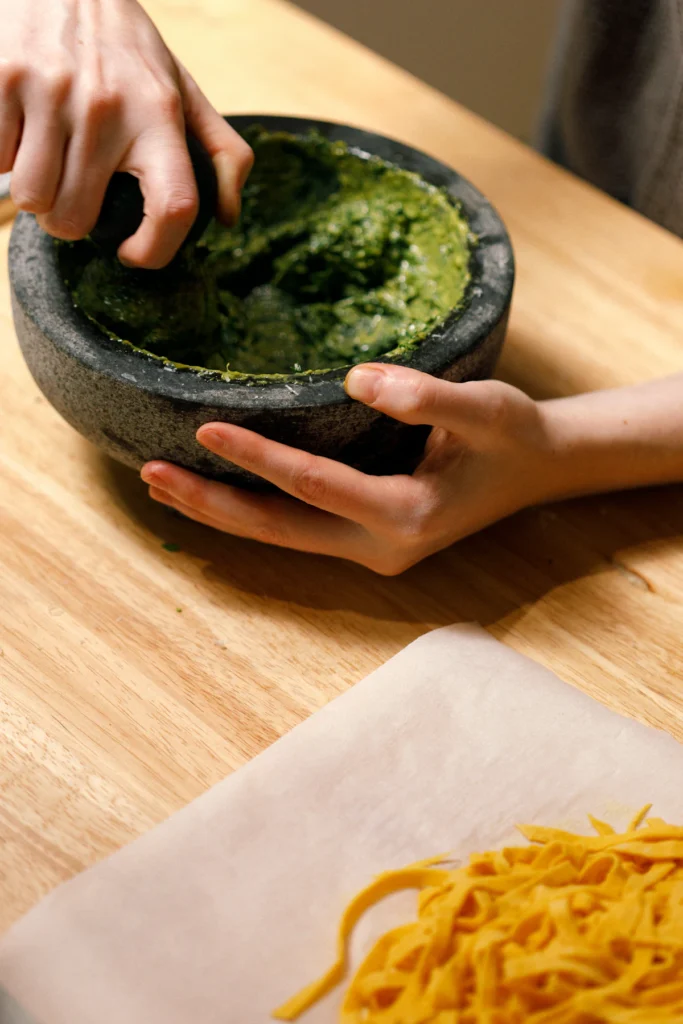
1863
The year Giovanni Battista Ratto published La Cuciniera genovese, the cookbook containing the first printed recipe for pesto.
The route, stop by stop
Six stops across the three medieval markets, from the quays to the shops, with three tastings along the way and an optional final stop.
- Piazza San Giorgio The first of the city’s three medieval markets, already measured in 1186. In front of a sciamadda baking since the eighteenth century we taste farinata and the legend of the “gold of Pisa”.
- Palazzo San Giorgio and the harbour From 1262 this was the customs house: grain, salt, spices, sugar and stockfish all passed through here. We explain why a city with so little farmland built its cuisine on trade.
- Sottoripa The Ripa arcades, the medieval waterfront almost a kilometre long. People still fry under these arches: we taste panissa at the fry shop loved by Fabrizio De André.
- Piazza Banchi and Via degli Orefici The second market, the money changers’ square: in a city that bought almost all its food, money was the hidden ingredient of every meal.
- Soziglia The third market, the street of sweets. In the confectioner founded in 1780 we discover the art of candied fruit and the sugar the Genoese called “Indian salt”.
- Pesto and the final stop From the first printed recipe of 1863 to the pesto kept alive by emigrants in Buenos Aires. We end in an old-town eatery: those who are hungry can taste or have dinner, the others finish the walk there.
The route on the map
The final stop is at an eatery in the old town, close to the last stop. Open the walking route in Google Maps
Who it’s for
For those who travel with curiosity and a good appetite, and for those who live in Genoa and want to know where the dishes of home come from. Each stop links a flavour to a trade route, a craft or a document.
Good to know
- We walk at an easy pace, with frequent stops. The old town has short climbs and uneven paving: I recommend comfortable shoes.
- Private and group visits on request, on a date and at a time to be agreed.
- At the end you receive the references for the sources used during the tour, so you can look them up at home.
- Food and drink at the final stop are optional and excluded from the tour.
The other tours
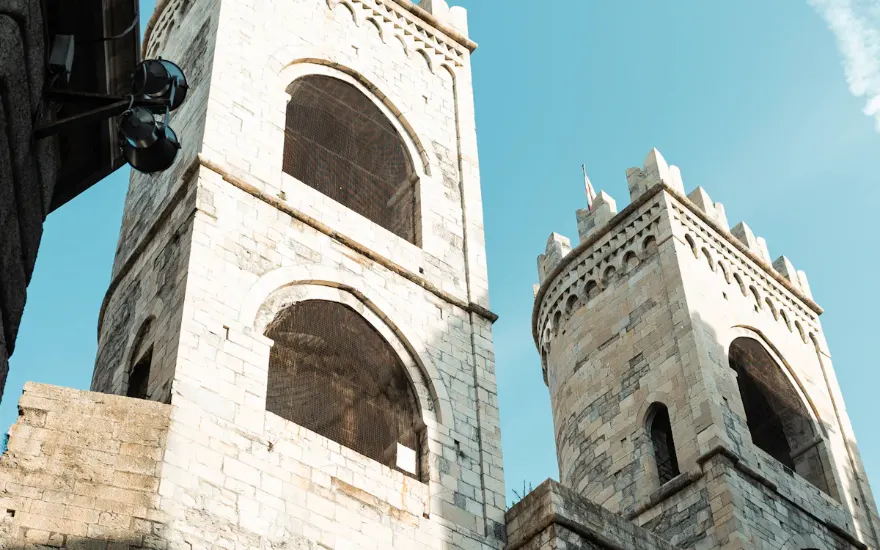
01
Medieval Genoa: towers, merchants and crusaders
The walls raised against Barbarossa, the towers of rival families, the cathedral and the palace where, according to tradition, Marco Polo was held prisoner.
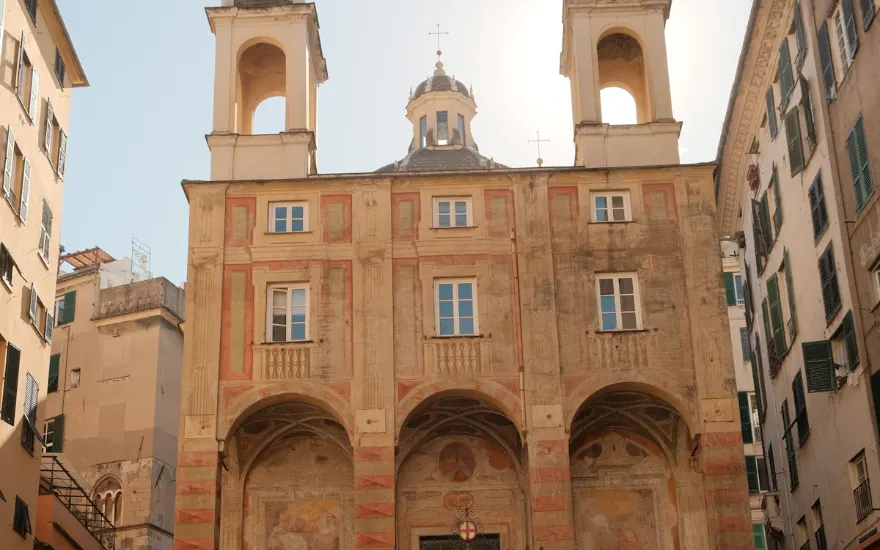
03
The secrets of the caruggi
Votive shrines, carved portals, a church built above shops and the palaces where the Republic hosted kings and ambassadors.
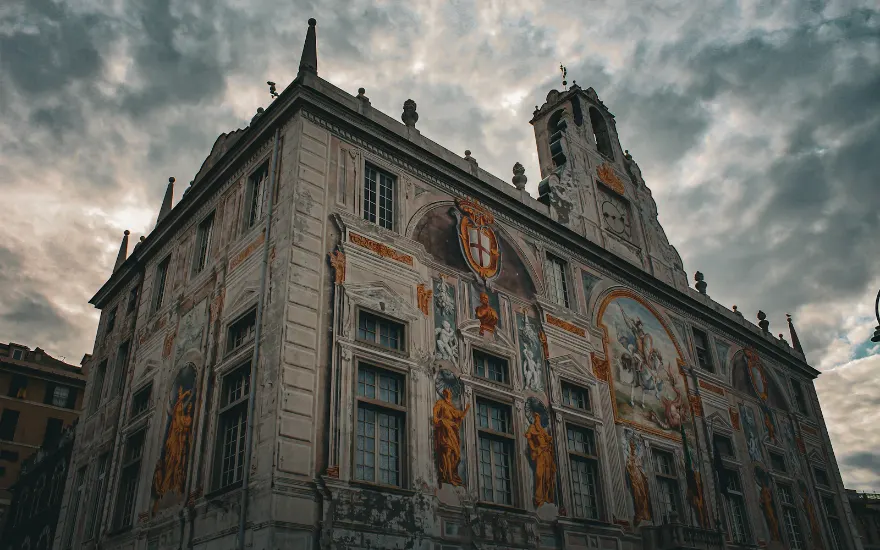
04
Genoa and Spain, there and back
The refugees of 1492, the bankers to the Crown, the captain in Don Quixote and the Genoese who founded Nueva Tabarca.
05
Leaving and arriving: Genoa, city of migrations
From the station where the emigrants stepped off to the Darsena: those who sailed for the Americas and those who came ashore in Genoa.
Choose your tour and write to me
Write to me for upcoming dates, to arrange a private visit or to bring a group. I reply within 24 hours.